- Trail Runner Australia
- Posts
- The Karnazes guide to ultras: It's supposed to hurt like hell!
The Karnazes guide to ultras: It's supposed to hurt like hell!
Ultra running legend Dean Karnazes is no stranger to pain.

Stuart Watt
April 10, 2026
Sponsored by

What Will Your Retirement Look Like?

Retirement looks different for everyone. What it costs, where the income comes from, how long it needs to last. Those answers are specific to you.
The Definitive Guide to Retirement Income helps investors with $1,000,000 or more work through the questions that matter and build a plan around the answers.
Download your free guide to start turning a savings number into an actual retirement income strategy.
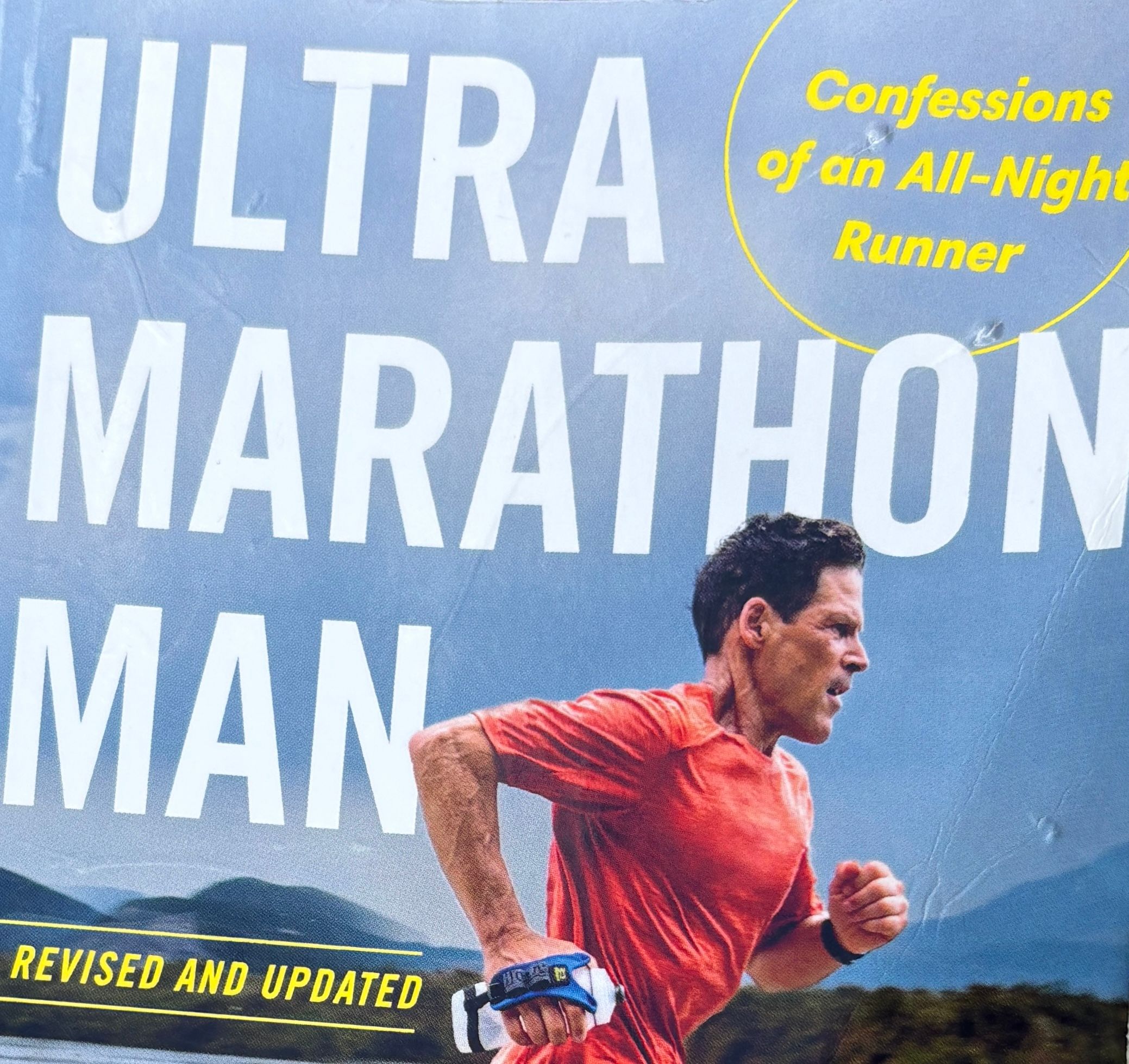
The rather battered cover of my copy of Dean Karnazes’s memoir is testament to how much I’ve thumbed through this book. It’s excellent.
To say Dean Karnazes had an unconventional start to his ultra running career would be an understatement. The American is now a legend of the sport, but his first crack at ultra distance began around midnight, with a nightclub as his starting line.
He wasn’t a runner at the time, and hadn’t come prepared. So after discarding his trousers and sweater, he embarked on this journey wearing silk Calvin Klein boxers, an undershirt and his made-for-the-office loafers.
His birthday celebration meant he’d preloaded with tequilla - effective for short-term pain relief - and along the way he stopped at a Taco Bell which met his nutritional needs.
After seven hours of running, as the sun was rising over the San Mateo coast in California, he sat down outside a 7-Eleven and called his wife. “You ran all night?” she asked him. “My God, are you okay?”
“I think so. I’ve lost control of my leg muscles and my feet are swollen stuck in my shoes. I’m standing here in my underwear. But other than that, I’m doing pretty well. Actually, I feel strangely alive.”
Karnazes’s memoir Ultra Marathon Man: Confessions of an All-Night Runner is full of quirky anecdotes like this, that give fizz to his account of his running career. It’s an inspirational and entertaining romp that’s all about finding meaning in life through running.
Ultra Marathon Man begins with the story of this madcap, off the cuff run. It then gives some early biographical background about the man himself - he is a Greek-American born and raised in California where he enjoyed an energetic outdoors lifestyle growing up.
Extreme mindset
The book is then structured around four key races which illustrate Karnazes’s growth as a runner - Western States, Badwater, the South Pole marathon and The Relay. Each of these races is more extreme than the one that precedes it, which is saying something given Western States is the “easiest” of the quartet.
And it tells you much about Karnazes’s mindset. He makes this clear early in the book, saying he lives by these words, first shared with him by coach Jack McTavish when Karnazes was in middle school: “If it comes easy, if it doesn’t require extraordinary effort, you’re not pushing hard enough: It’s supposed to hurt like hell.”
He may not have realised it at the time, but he’d not just become a newborn runner, he’d become a fanatic!
Running … to the beach
That 30-mile jaunt wasn’t Karnazes’s first dalliance with the sport. He’d always been a runner, right back to his days running home from preschool. Once he’d reached his teens, Karnazes’s first sporting love was surfing, but running still had a place in his heart.
At high school, he had a choice - cross-country or track. “The track guys ran intervals and kept logbooks detailing their mileage. They wore fancy watches that counted laps and recorded each lap-time. The mile was divided into four quarters, each quarter-mile split being logged and compared to previous benchmarks. Everything was measured, dissected and evaluated.
“Cross-country guys didn’t keep track of anything. They just found a trail, and ran. Sometimes the runs would last an hour, sometimes three. It all depended on how they felt that day. After the run they would move onto the next thing, which was usually surfing.”
It wasn’t a difficult decision - he became a cross-country runner. And he probably should have stuck with it. The cross-country coach encouraged his team to “run with your heart”. But the cross-country season was shorter than the track season, and when Karnazes decided to join the track team, he was in for a rude awakening.
When Karnazes told the coach, “I run with my heart,” the coach whooped with laughter and ridiculed him. “I wanted the punch the bastard. Instead, I walked off the track and hung up my shoes. I didn’t run again for 15 years.” Whatever the sport, poor coaches have a LOT to answer for.
Obsessed
Maybe it was the best thing that could have happened to Karnazes, because when he returned to the sport it was with the fervour of a zealot.
Karnazes first heard about Western States shortly after his 30-mile birthday adventure. It sounded impossibly hard and he immediately decided he had to run it. To qualify, he had to complete a 50-mile trail race.
This introduced him to the pain, euphoria, ecstacy and agony of ultra trail running, and he’s been hooked ever since. After some death-defying - literally - exploits on the Western States course, he finished in an amazing 15th place overall, which he described as a decent effort for a rookie.
Badwater was the next challenge - 135 miles (217 kilometres) - through Death Valley from the lowest point in the US to Mount Whitney, the nation’s highest mountain outside Alaska. Temperatures are so extreme, runners need to literally run along the white lines painted on the road. The ashphalt gets so hot it can literally melt the soles of runners’ shoes.
The race beat Karnazes at his first attempt but he was back a year later, 1996, to complete it. From temperatures of more than 50 degrees, the next logical step was … a marathon to the South Pole.
This had never been done before, and has never been done since. There were only three competitors, and the other two were wearing snow shoes. Of all the stories in the book, this is both the most unique, and the most extreme.
Ultra Marathon Man ends with Karnazes’s account of The Relay, a 200-mile race in California that is usually taken on by teams of 12 runners, hence the name. Karnazes being Karnazes, decided to take it on solo.
He didn’t stay solo for long though, at least in spirit. As he neared the end of the course, and word that he was attempting the race alone spread, more and more people became self-proclaimed members of “Team Dean”, cheering him on to the finish line.
And once he got there, after more than 46 hours, the sweetest prize of all - a cuddle with toddler Libby Wood. Libby was a patient at a local hospital and the race was conceived to raise money for organ donation and transplantation for kids like her.
Ultimately, this is a book about why Karnazes runs and, by extension, why any of us run. It’s a tribute to human resilience and to Karnazes’s sister Pary, who died in a car crash on the eve of her 18th birthday.
It’s inspired countless people to lace up and get out there in an attempt to answer that most fundamental question: How far can I run? It’s also a thoroughly entertaining read.
Upcoming Events
There are way too many events for me to list everything that’s happening around the country, but here is a selection of upcoming races (with a bias towards South East Queensland).
Event | Location | Date |
|---|---|---|
Adelaide Hills, SA | 19 April 2026 | |
Healesville, Vic | 19 April 2026 | |
Brisbane, Qld | 26 April 2026 | |
Wilsons Promotory, Vic | 2 May 2026 | |
Sydney, NSW | 3 May 2026 | |
Port Stephens, NSW | 3 May 2026 | |
Margaret River, WA | 9 May 2026 | |
Katoomba, NSW | 14-17 May 2026 | |
Alice Springs, NT | 15 May 2026 |
The Running Calendar website is a great source if you want a comprehensive understanding of what’s available around the country.