- Trail Runner Australia
- Posts
- How to get the most out of a sweaty business
How to get the most out of a sweaty business
With a little preparation, running in the hot weather doesn't need to be all downside.

Stuart Watt
January 30, 2026
In partnership with


Hot, hot, hot…
Running in summer sucks. The heat makes even an easy run feel hard. And then there’s the sweat. At the moment, I finish every run looking like I’ve just stepped, fully clothed, out of the shower.
All that sweat is pretty gross, especially if you are getting into a car after a run, but it can also have some serious consequences if you’re not careful - right up to and including the most serious: death.
Of course, that most dire outcome is a rarity, but it’s still worth thinking about hydration whenever you are running in hot conditions because ending up dehydrated is no-one’s idea of fun.
At its most basic, dehydration is defined as occurring when you don’t have enough fluid in your body. Symptoms include feeling thirsty, having a dry mouth and headache. The most simple remedy is to drink more water.
Men, Say Goodbye to Eyebags, Dark Spots & Wrinkles

Reduce eyebags, dark spots and wrinkles with the first of its kind anti-aging solution for men.
Based on advanced dermatological research, Particle Face Cream helps keep your skin healthy and youthful, ensuring you look and feel your best every day.
Get 20% off and free shipping now with the exclusive promo code BH20!
This is good advice for runners, but the reality is a bit more complicated. When you sweat, it’s not just water you lose. Sweat also contains electrolytes - sodium, chloride, potassium, magnesium and calcium.
Of these, sodium and chloride are lost in the greatest amounts. Those of you who remember your high school chemistry will recognise that the chemical compound sodium chloride is what we call table salt, which is why sweat tastes salty.
It’s important to maintain a healthy electrolyte balance, especially while exercising, because electrolytes play a key role in muscle activity. Among other things, electrolytes are used by your nervous system to, in effect, send messages around your body.
Probably more important is the role sodium plays in regulating blood volume. Most of the sodium in your body is found in your blood. The sodium enables you to absorb more of the fluid you drink, which increases your blood volume.
The greater your blood volume, the less hard your heart has to work to get oxygen to your muscles and to cool you down.
Put another way, as you lose sodium, your blood gets “thicker”. This means your heart has to work harder to pump it around your body to deliver the oxygen you need to keep running. So as you lose sodium, your heart rate has to increase in order to maintain the same level of effort.
This is one of the reasons salt tablets, or the sorts of sachets of table salt you will find in a cafe, are regular go-tos for ultra runners. The longer you run, the more you sweat; the more you sweat, the more sodium and chloride you lose; the more you lose the more you need to replace.
So how much do you lose, and how much do you therefore need to take during a race? There are so many variables that influence this it’s very difficult to be definitive. The temperature, the humidity and even the clothing you are wearing will all have an impact.
But most telling is genetics. We all sweat at different rates - both in terms of volume of fluid lost and the “saltiness” of that sweat. So what works for one person may not work for another.
Thankfully, it’s fairly straightforward to have this tested. If you’re running ultras up to and over the 100k mark, an accurate sweat test and a hydration plan underpinned by science rather than guesswork can be a game changer.
In fact, if you’ve lost a lot of sodium through sweat and you only replace the fluids by drinking an excessive volume of water, you can actually dilute the sodium in your body to a dangerous degree, resulting in a condition called hyponatremia. And you really don’t want that during a race.
If you’re at the other end of the spectrum and you’re running for an hour or less, it’s almost certainly fine to rehydrate with water alone. Unless you’re a particularly salty sweater, you’re unlikely to lose enough electrolytes to have a problem.
So, how do you tell if you’re dehydrated? Firstly look out for those symptoms - feeling thirsty, a dry mouth and a headache. The other telltale sign is the colour of your urine - the lighter it is, the more well-hydrated you are.
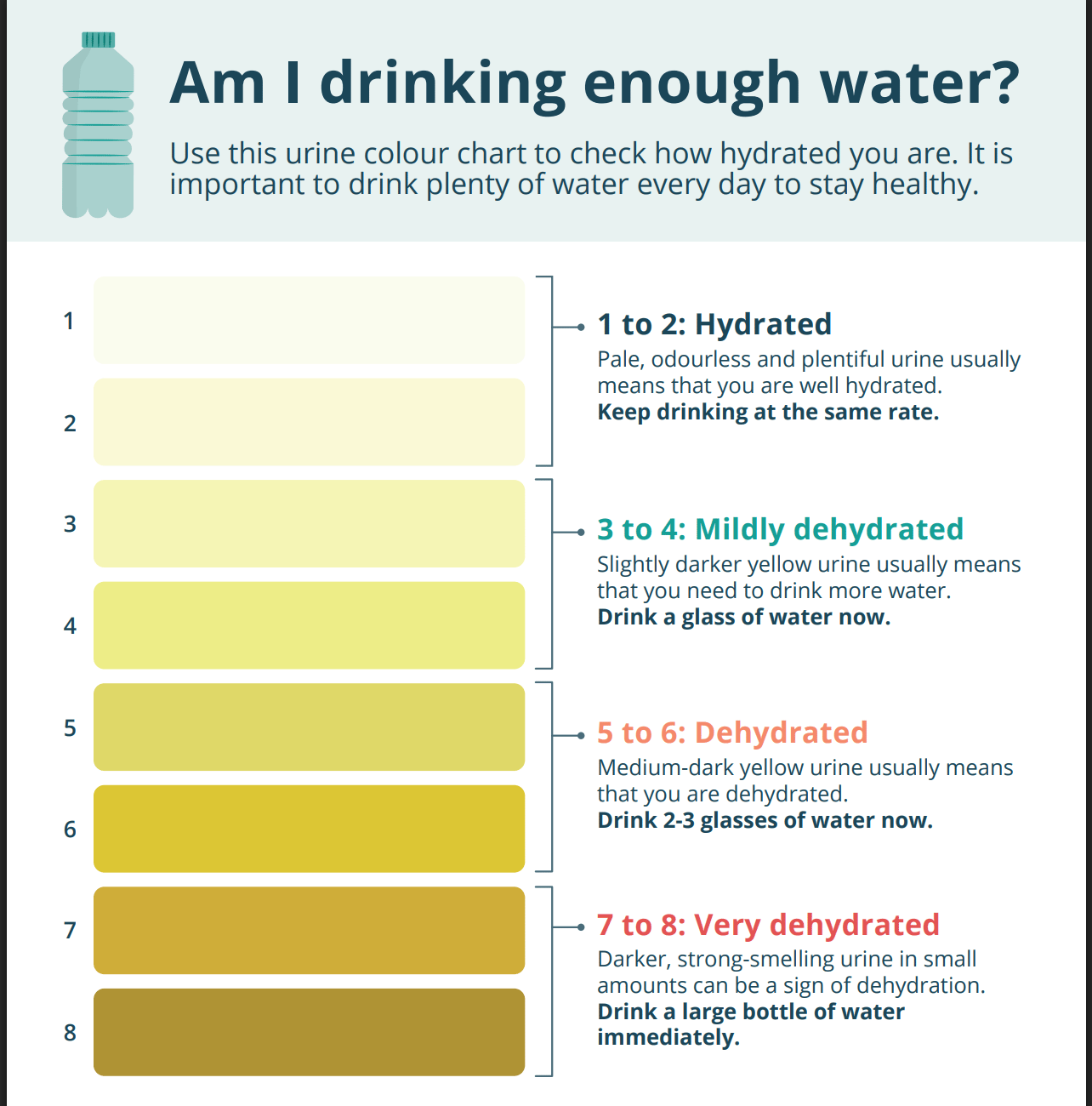
Source: Health Direct. www.healthdirect.gov.au
As a runner, it’s not enough to think about hydration only when you’re actually running. Especially for long runs, you also need to think about your fluid intake pre and post-run. This is really just commonsense: make sure you drink enough to be well hydrated before you head out on a run, and continue to drink once you’re done.
During a long run, little and often is the advice. Excess fluid intake can result in that fluid sloshing around in your stomach while you’re running, which is a revolting sensation. The longer the run the more your hydration strategy will overlap with your nutrition strategy.
Electrolyte drinks and tablets are one way of replacing lost sodium and chloride. But eating salty food can also be effective, which is probably why salted potato chips are a staple at ultra aid stations the world over.
Wall Street’s Morning Edge.

Investing isn’t about chasing headlines — it’s about clarity. In a world of hype and hot takes, The Daily Upside delivers real value: sharp, trustworthy insights on markets, business, and the economy, written by former bankers and seasoned financial journalists.
That’s why over 1 million investors — from Wall Street pros to Main Street portfolio managers — start their day with The Daily Upside.
Invest better. Read The Daily Upside.
Realistically, we are all likely to become at least a little dehydrated at some point in our running. But it’s important to be aware of it because while mild dehydration is no big deal, it’s the start of a continuum that ends with coma and potentially death.
Dehydration can lead to heat exhaustion which can lead to heat stroke. The symptoms to look out for in heat stroke are confusion, agitation, slurred speech and/or hallucinations, plus nausea and vomiting. The skin can become hot and dry - the person can no longer sweat because they have no fluid to give up.
This is a medical emergency, so if you find someone who has these symptoms you need to call 000, give them small sips of fluid, keep them as still as possible and do whatever you can to cool them down.
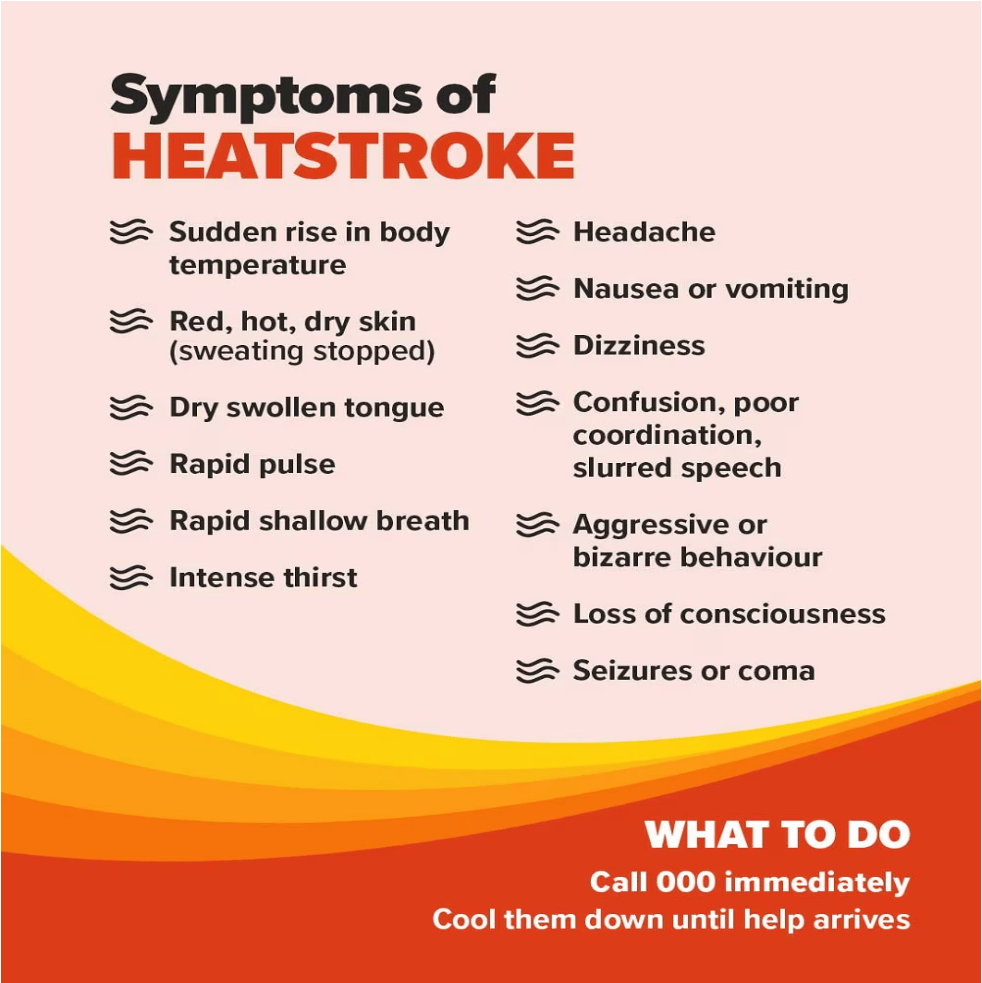
Source: South Australia Health. www.sahealth.sa.gov.au
The upside
While it’s hard work, very sweaty and often not a huge amount of fun, there is upside to running in the hot weather - heat acclimation (or acclimatisation). We humans are very adaptable. The more we run in the hot weather, the better our bodies get at it.
This has an obvious advantage if you’re planning a race where conditions are likely to be hot. Don’t do all your training at dawn if your key race for the year will be through the middle of the day in summer. The more used to the heat you are, the better you’ll go on race day.
But research has shown regular exercise in the heat also leads to physiological changes that are beneficial. This again relates to blood volume - by running in the heat you are training your body to get blood, and therefore energy-giving oxygen, to your muscles more efficiently.
My Garmin reports my heat acclimation by keeping track of the number of runs I complete when the temperature is 22 degrees or higher - which, in summer in Brisbane, is more or less every run.
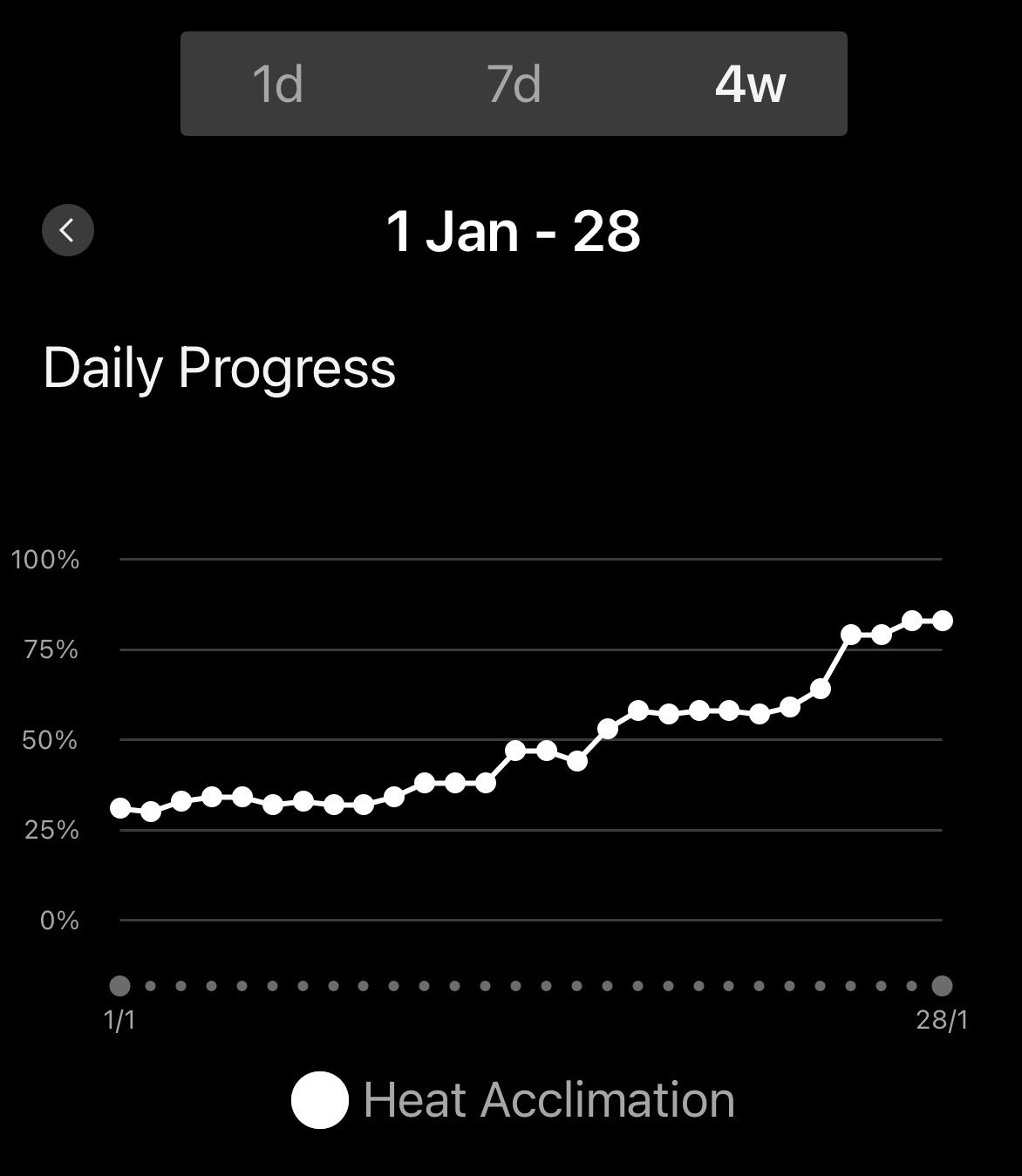
Unsurprisingly, given it’s the middle of a Queensland summer, my Garmin thinks I’m over-achieving as far as heat acclimation goes.
Coach and elite ultra runner David Roche has been a big advocate of heat acclimation, which he’s achieved in a number of ways including by running in a “heat suit”. It seems to have worked for him. Although his tilt at Western States ended in a DNF, he’s twice set the course record at the Leadville 100, one of the most gruelling ultramarathons on the planet.
(As the video says, don’t try this at home!)
Ultra running legend Kilian Jornet also used a scientific approach to heat training ahead of his run at Western States, a race notorious for how hot it can get, last year. Jornet lives in Norway, not the hottest of locations. So to prepare, he set up a stationary bike inside his home and cranked up the heating.
Interestingly, some research suggests you don’t have to exercise in the heat to achieve similar results. A hot bath after a run could be just as effective!
So, the next time you’re out there sweating it out in the summer sun, feeling like your head’s about to explode, remember it’s not all bad. It’s working wonders for your blood volume!
Sources:
Salt increases physical performance in resistance competitions. Reported in the Spanish Foundation for Science and Technology (SINC).
Post-exercise Hot Water Immersion Elicits Heat Acclimation Adaptations in Endurance Trained and Recreationally Active Individuals. Reported in the National Library of Medicine in the US.
Upcoming Events
There are way too many events for me to list everything that’s happening around the country, but here is a selection of upcoming races (with a bias towards South East Queensland).
Event | Location | Date |
|---|---|---|
Brisbane, Qld | 1 February 2026 | |
Robe, SA | 7 February 2026 | |
Kosciuszko National Park, NSW | 14 February 2026 | |
Mt Buller, Vic | 20 February 2026 | |
Wilson’s Promontory, Vic | 21 February 2026 | |
Mt Baw Baw, Vic | 1 March 2026 | |
Glenview, Qld | 1 March 2026 | |
Warburton, Vic | 7-9 March 2026 | |
Gold Coast, Qld | 13 March 2026 | |
Katoomba, NSW | 14 March 2026 |
The Running Calendar website is a great source if you want a comprehensive understanding of what’s available around Australia.