- Trail Runner Australia
- Posts
- Adventure racing. It's in the name
Adventure racing. It's in the name
Edwin Trevor-Roberts runs, cycles and paddles me through the world of adventure racing, a sport where the nutrition plan could include a pie, a Coke and an ice cream.

Stuart Watt
March 20, 2026
Sponsored by

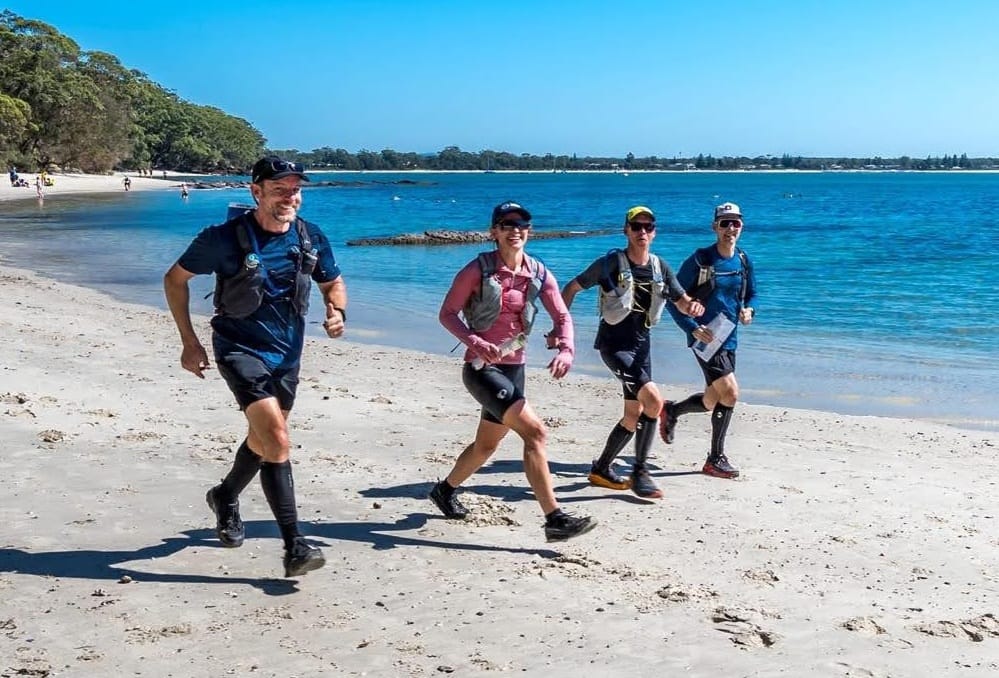
Adventures with mates in beautiful places. What’s not to like about Adventure Racing? The Out There Wandering team certainly seem to be enjoying it. Image: Terra Nova 24
It’s hard not to be drawn to a sport called Adventure Racing. For Edwin Trevor-Roberts, it was impossible to resist, especially as he describes “adventure” as one of his values.
Next month Edwin and his team Out There Wandering will take part in the Legend Expedition Adventure Race in Adelaide, run by Wild&Co. To call this epic doesn’t really do it justice. It’s a non-stop, 500k, six-day journey involving a bunch of different “adventure disciplines”.
It’s been a 20-year quest for Edwin to get to this point. He has multiple adventure races under his belt, but this will be his first multi-day event. “I’ve been wanting to do one of these [for 20 years]. I’ve just never found people crazy enough,” he says.
Edwin is the lead navigator and captain of his team of four. He’ll race alongside Arran Brown, Joel Feros and his neice Justine Grohs. All four have roles in the team. Joel and Arran are secondary navigators. Justine is a medical doctor so she looks after physical and mental wellbeing as well as reminding them all to eat regularly.
Joel is a workhorse and team motivator, “full of energy, full of spirit”. And Arran, who is ex-military, is a great strategic thinker, adept at “looking at the macro picture of the race”.
So, what is this sport for crazy people? “Adventure racing is a team multi-sport event. It always includes three disciplines, which are trekking/running, mountain biking, and kayaking,” Edwin says.
“Plus, there'll be other disciplines thrown in, [think things like rappelling, caving and orienteering] depending on the course. And it involves navigation.” Navigation? How so?
“A couple of hours before the event, you get the map [of the course], and you've got to figure out which way you go. So, the navigation’s a massive part of it, but also the team has to stay together.
“If one drops out, the whole team drops out. So that's one of the real challenges.” What about race distances? “It builds up locally from three-hour races up to 24 and 48 hours.
“You then move into expedition length races, which are five days plus. And there's a world series that happens once a year when all the top teams come together and compete. It most recently was held in Canada over eight days - 900 kilometres and eight days of pretty gruelling Canadian mountains.” Not hard to see why it’s called Adventure Racing.
Are You Ready to Actually Retire?

Knowing when to retire is harder than knowing how much to save. The timing depends on what your retirement actually looks like: how long your money needs to last, what you'll spend, and where your income comes from.
When to Retire: A Quick and Easy Planning Guide is built for investors with $1,000,000 or more who are ready to move from saving to planning. Download your free guide and start working through the details.
The navigation is one of the big challenges, but also the big drawcards of Adventure Racing. As a former cadet and Duke of Edinburgh Award recipient, Edwin knows his way around a map.
Navigating his way around a course would be reward enough, but doing so under the pressure of race conditions and under increasing fatigue takes the effort to a whole other level.
In a funny way, Edwin says this helps take his mind off the physical stress the race imposes. “You're doing a reasonably intense physical activity, but you're not aware of it because your cognitive load is so high. You’re thinking so much about the navigation, about what's going on… all these other things. It's like the physicality is secondary to the actual event itself.”
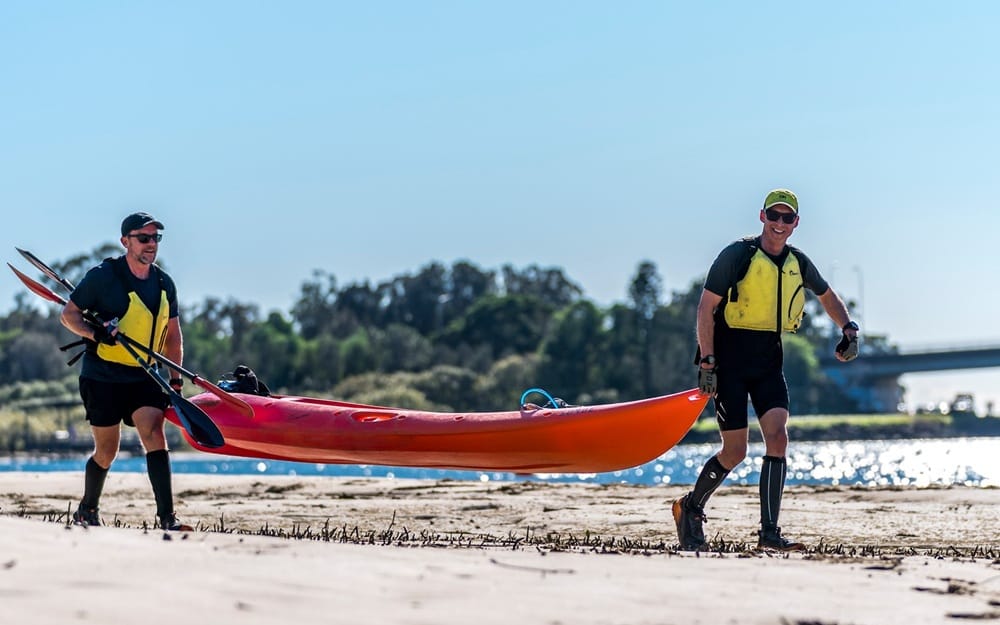
All teams compete in kayaks provided by the race organisers. They’re not exactly sleek (the kayaks, that is), so there’s little difference between teams in terms of speed on the water. Image: Wild&Co
Races, especially the longer versions, are also highly strategic. And plans can’t really be made in advance, so thinking on your feet (and on your bike and in your kayak) is fundamental.
Before a race, teams - which comprise either two or four people - receive a “logistics plan”. Each race comprises a number of legs - one discipline per leg, with a transition area allowing teams to shift from one discipline to the next.

The logistics plan for the Terra Nova 24 hour race in Huskisson, south of Sydney, last April. Image: Wild&Co.
The logistics plan sets out what discipline will be required for each leg, an estimate of how long the leg is likely to take, and the nature of the transition area.
This is essential because these races are unsupported, which means teams need to either carry everything they need with them, or plan carefully what to put in a series of drop boxes they can leave at certain checkpoints.
In case you’re wondering, teams don’t need to lug their bikes and kayaks around the non-biking and kayaking legs - they’re taken from the finish of one leg to the start of the next by organisers. While competitors bring their own bikes, everyone uses supplied kayaks, which dramatically levels the playing field when it comes to speed on the water.
Some checkpoints have water, others don’t. So teams have to carry extra water or leave a supply in the boxes at the checkpoints where no water is supplied. The boxes are a set size - you can’t turn up with something akin to a shipping container.
Feeling off lately? It could be your hormones.

Allara helps women understand the root cause of their hormonal or metabolic symptoms with a comprehensive care team that combines expert medical and nutrition guidance. Whether you're managing PCOS, fertility challenges, perimenopause, thyroid conditions, or unexplained symptoms, you'll get a personalized care plan backed by advanced diagnostic testing and ongoing support. This isn't about quick fixes. It's about getting clarity and feeling like yourself again, with care that's accessible virtually and covered by insurance.
An hour or so before the race starts, each team is given two sets of maps which mark the course in detail, including the location of checkpoints. To complete the race, teams need to successfully reach at least one checkpoint per leg.
But for tactical reasons, teams can choose to skip checkpoints. A time penalty is applied for each skipped checkpoint, but taking a strategic approach to the race can pay dividends.
Edwin says there are parts of the course that are “dark zones” - which means you can’t enter those sections of the course at certain times. An example might be a section of rapids that is too dangerous to tackle in the dark. A team could decide to skip a checkpoint prior to hitting those rapids to allow it to beat the clock and get onto the water before the cut-off time.
Visiting the checkpoint could delay the team, meaning they have no choice but to stop racing when they get to the rapids. And the time lost in doing so may far exceed any penalty. So Adventure Racing is not just about speed and endurance, but brains as well.
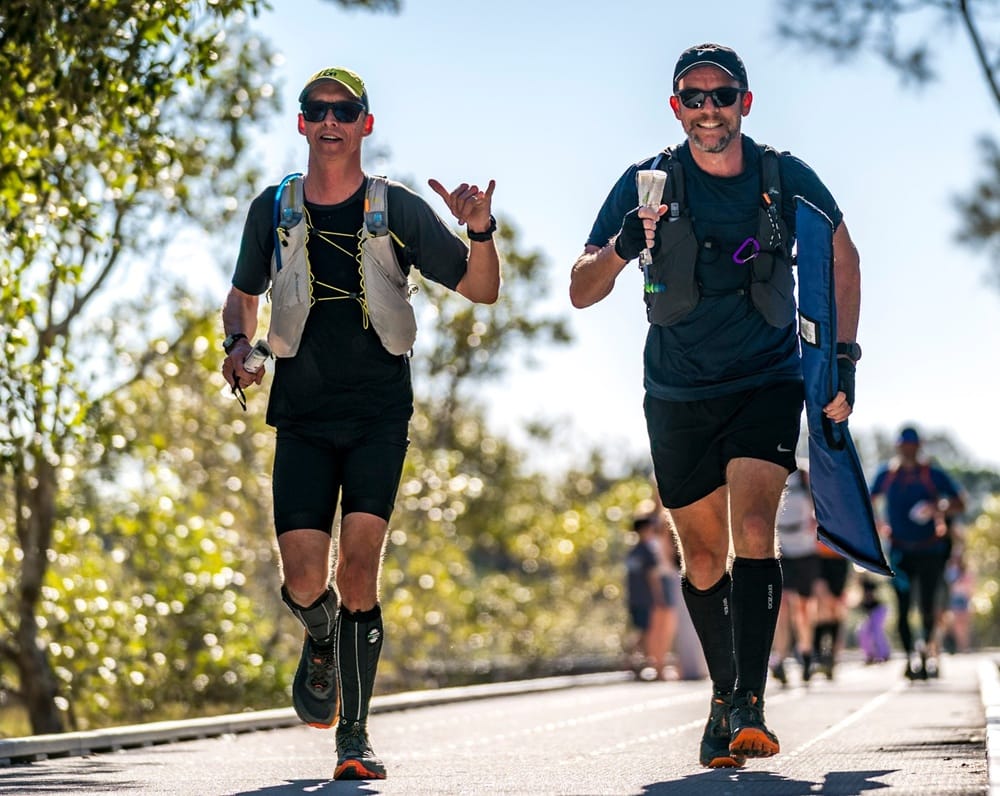
Running ability is a key part of Adventure Racing. Image: Wild&Co
Chronic fatigue
Stepping up from a 24-hour event to one lasting for up to six days will present Edwin and the team with a number of challenges to overcome. “I think the big one will be decision making under chronic fatigue.
“We plan to sleep at least three hours a night. Some teams are planning not much sleep at all… It’s our first Expedition Race and we want to enjoy it so we’re going to get at least three hours sleep - which doesn’t sound a lot, but it is,” he says.
Making decisions at “really curly navigation points” and the speed with which those decisions can be made are big unknowns.
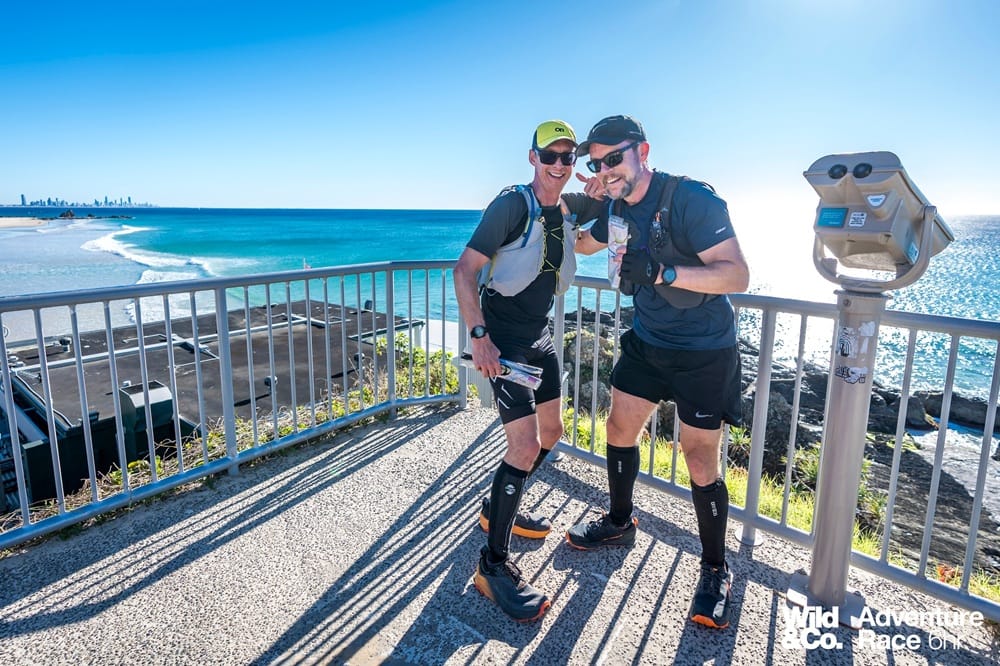
Teams have to find checkpoints along the course. They are often in hard to reach places… Image: Wild&Co
Teamwork
During the race, all four team members need to stay with 100m of each other. In the past, Edwin says the team has been a bit like four individuals racing in a group. But in Adelaide, he wants the team to be more like a single entity “with four different tendrils”.
“There is a mindset shift that I’d like us to try for in this race,” he says. This change in mindset is likely to manifest in subtle ways and strengthen the bond between team members.
Edwin says the team dynamic and how it operates is one of the things that fascinates him about Adventure Racing. “How do teams operate under pressure? Especially this incredible mental and physical pressure. And where are your vulnerabilities?”
He then gives me an example. “On our second 24-hour race, I was really interested in what 2am Edwin was like. So, 2am Edwin - he’s fine. He’s focused. He’s clear. He’s awake. No problems.
“9pm Edwin? Disaster! Absolute frigging disaster. Because that’s normally when I go to sleep. So between 9pm and 10:30pm I’m at my worst cognitive load.” He says he’s learned to accept that vulnerability. Now the rest of the team steps in to double check 9pm Edwin’s navigation decisions.
He also expects the longer duration of this race, and the extra fatigue it’s likely to result in, will test team cohesion in new ways. “We’ve all got a competitive spirit but sometimes you’ve got to subjugate that competitive spirit for the greater good. [We might decide] we need to go slower for the next few hours, or we just need a nap,” he says.
“Looking after each other and supporting each other is going to be a big part of it.”
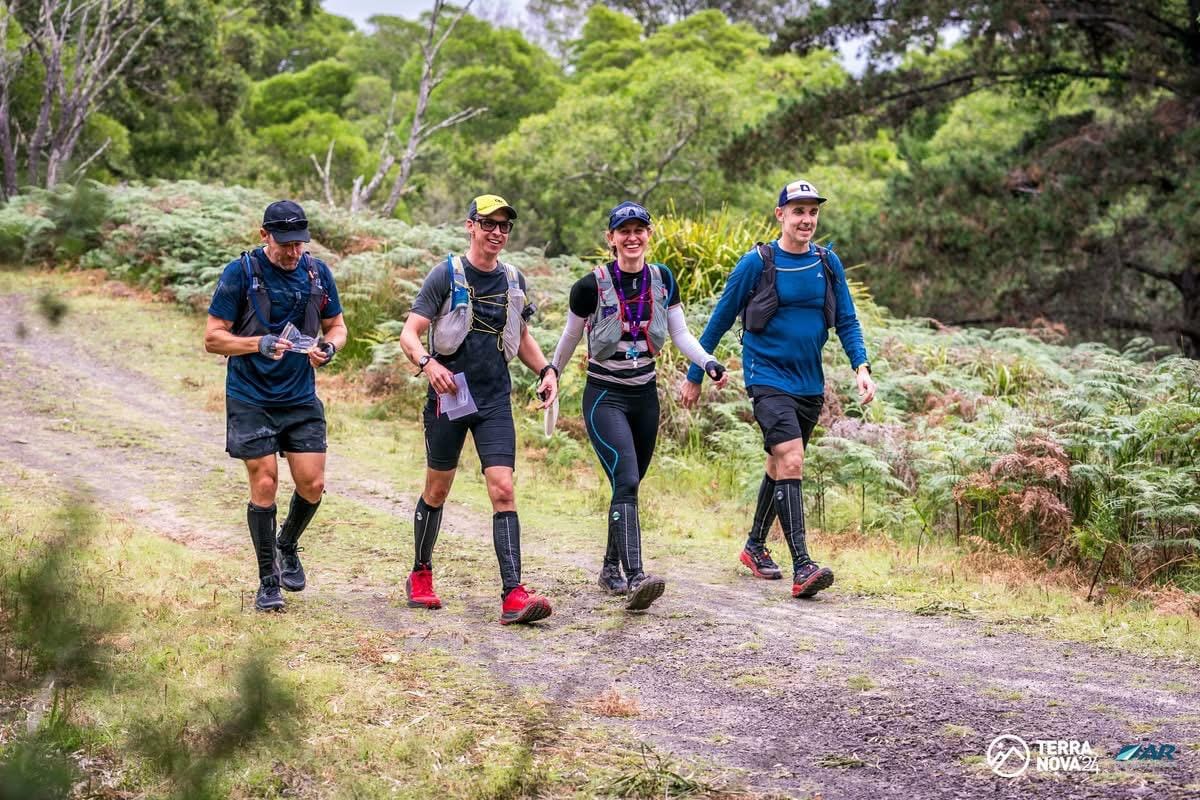
During a race, all team members need to stay within 100m of each other from start to finish. Teamwork is a key element of the sport. Image: Terra Nova 24
Glorious food
Nutrition is another challenge for longer races, but Edwin says this is less of an issue for Adventure Racers compared with ultra runners. Because Adventure Racers rarely get out of zone 2, they can generally tolerate whole foods. The gut issues that plague many ultra runners are not unheard of, but they’re not common either.
Early on in a race, Edwin’s tastes are pretty simple. “I love vegemite sandwiches, white bread with the crusts cut off. It’s easy to digest, salty, a bit of carbs and it goes straight in,” he says.
“Then we’ll be doing a whole bunch of freeze-dried meals. We’ll try to get at least two good meals in a day, a breakfast and a dinner. And the rest of the day we’re snacking constantly on whatever we’ve got.
“It could be muesli bars, it could be cooked potatoes. We’ve had soup before. If we’re going through a town we’ll stop in at the bakery and grab a pie or something… There’s nothing to stop us walking into a servo and buying a Coke and and ice cream.”
Wearing yourself out evenly
Training for a multi-sport event as a team of four when you also have busy lives obviously has its challenges - especially when one of you, Justine, lives on the other side of the country.
But Edwin says this has never been a huge issue. He says all four of them are committed to maintaining a base level of fitness, and they have become each other’s greatest cheerleaders on Strava. They also have a WhatsApp group that helps foster a sense of connection.
Working across all three disciplines sounds like a lot, but Edwin says it has its advantages. “Because you’re not just doing the one activity, you’re wearing your body out evenly! It’s great! It’s not just your knees that hurt, or your hips - everything hurts!”
It is an exercise in logstics though. “[You’ve got to] make sure you’re getting the running in, you’re getting some cycling in, somehow getting some paddling in then doing strength training.”
Ultimately, what drives Edwin and the other Out There Wanderers is the same as what motivates many ultra runners - trying to answer the simple question, “What’s possible?”
“It’s what struck me in the 24-hour race. I thought, ‘Can I go through [the night]?’ And it was so much easier than I thought. Our mental capacity and our mental resilience is the limiting factor, not our physical prowess.
“Our bodies can keep going, our bodies are just incredible what they can do. It’s how mentally we can cope… can you get comfortable with the uncomfortable? For most of it, something’s going to hurt, something’s going to be sore, something’s going to be unpleasant.
“But when you lift up in a helicopter and look at the grander picture of what you’re doing, versus sitting on the couch and watching a movie… You know, not many people get to do that.”
In mid-April, when the rest of us are still working off any excess Easter egg exuberance, the Out There Wanderers will be out there, wandering. Can they do it? They won’t die wondering.
There are way too many events for me to list everything that’s happening around the country, but here is a selection of upcoming races (with a bias towards South East Queensland).
Event | Location | Date |
|---|---|---|
Bright, Vic | 27 March 2026 | |
Hobart, Tas | 27 March 2026 | |
Sunshine Coast, Qld | 5 April 2026 | |
Falls Creek, Vic | 11 April 2026 | |
Adelaide Hills, SA | 19 April 2026 | |
Healesville, Vic | 19 April 2026 | |
Brisbane, Qld | 26 April 2026 | |
Wilsons Promotory, Vic | 2 May 2026 | |
Sydney, NSW | 3 May 2026 |
The Running Calendar website is a great source if you want a comprehensive understanding of what’s available around the country.